Flatpack Furniture Before a Sale: What to Keep, Store, Replace, or Remove
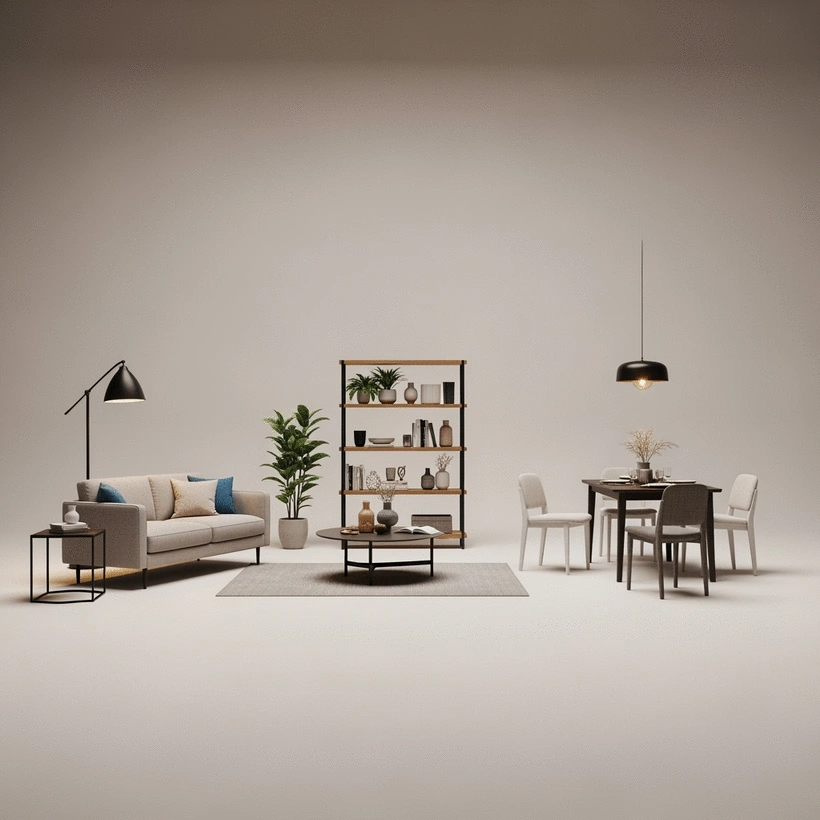
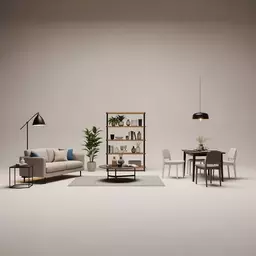
Flatpack furniture before sale is useful only when it helps buyers understand how each room works. It should not make the room feel smaller, hide damage, block movement, or create a safety concern. Before buying anything new, inspect what you already own and decide what to keep, store, replace, or remove.
The goal is simple: make the room read clearly in listing photos and during inspections without spending money on furniture the property does not need.
If you are unsure how the finished room will read in photos, review examples from Home Staging Melbourne.
Why Flatpack Furniture Can Help or Hurt a Sale
Flatpack furniture is useful because it is affordable, flexible, and common in Australian homes. A simple bookshelf, TV unit, dining table, bedside table, desk, or storage cube can help define a room without the cost of full professional furnishing.
The same furniture can work against the sale when it is the wrong scale, poorly assembled, visibly damaged, overloaded with belongings, or placed where buyers expect walking space.
A buyer does not inspect your furniture as the product being sold. They use it as a measuring tool. If the furniture makes the room feel functional, the property gains clarity. If it makes the room feel cramped or temporary, the buyer may question the room size, storage, or layout.
That is why the decision should not be "Do we keep flatpack furniture or remove it?" The better question is: "Does this piece help the buyer understand the room?"
DIY Flat Pack's guide to choosing flatpack furniture for home explains the flexibility of modular pieces, multiple finishes, and reconfigurable layouts. Those same strengths are useful before a sale if the furniture is edited with restraint.
Start With a Room-by-Room Furniture Audit
Walk through the home as if you were seeing it for the first time online.
For each room, ask:
-
What is this room meant to be?
-
Does the main furniture support that function?
-
Can a buyer see the floor area?
-
Can someone walk through without turning sideways?
-
Is anything visibly damaged or badly assembled?
-
Does the furniture hide or distract from a repair issue?
-
Does the room look lived-in, useful, or overloaded?
-
Would the listing photo make sense without explanation?
Take phone photos from the doorway and from the likely photographer's position. A piece that feels harmless in person may dominate the photo. A narrow bookcase may appear taller and heavier in a listing image. A small table may make the dining area look under-scaled.
A photo review is especially useful in living and dining rooms. A 2026 realestate.com.au report based on more than 12 million digital property inspections found that living, kitchen and dining zones attracted the longest engagement time and acted as primary value anchors. See the report on where homebuyers spend their time.
The Keep, Store, Replace, or Remove Checklist
Use this checklist before buying new furniture.
| Decision | Keep it when | Store or remove it when | Replace it when |
|---|---|---|---|
| Sofa | It fits the room, leaves movement space, and photographs cleanly | It blocks flow, overwhelms the room, or is badly worn | The room needs seating to show purpose and the existing sofa looks poor |
| Dining table | It shows realistic seating without crowding | It makes the room feel too narrow or blocks the kitchen path | The dining zone is unclear without a correctly scaled table |
| Bookshelf | It gives vertical storage without visual mess | It is overloaded, leaning, unsafe, or blocking natural light | The room needs simple storage but the current shelf is damaged |
| TV unit | It anchors a living area neatly | It is too bulky or full of visible cords | The living area needs a cleaner focal point |
| Desk | It supports a real study nook or bedroom workspace | It turns a bedroom into a storage zone | The room needs a compact work-from-home cue |
| Bedside table | It balances the bed and shows usable width | It crowds the walkway or looks mismatched in a distracting way | The room needs scale on both sides of the bed |
| Storage cube | It hides small items neatly | It becomes open clutter or looks temporary | Closed storage would clarify the room |
| Wardrobe or tallboy | It adds needed storage and is stable | It is unstable, top-heavy, damaged, or badly positioned | Built-in storage is limited and the room needs a tidy solution |
The key is not the age or price of the furniture. The key is whether the piece improves room function, photo clarity, and buyer movement.
Assess Scale Before You Assess Style
Scale matters more than trend.
A cheap flatpack table that fits the room may be more useful before a sale than an expensive table that makes the dining area feel too small. A low-profile TV unit may be better than a tall cabinet that cuts the room in half visually.
Check scale in three ways.
Floor space
Can people walk naturally around the furniture? In a living room, avoid furniture that forces a narrow zig-zag path from the entry to the balcony, hallway, or kitchen.
Wall space
Large flatpack shelving can make a small wall look full. If the room has only one clear wall, do not cover it with overloaded storage before photography.
Visual weight
Dark, tall, deep, or blocky pieces feel heavier than pale, low, open, or narrow pieces. A black cube shelf may look larger than its measurements suggest. A pale dining table with slim legs may let the room breathe.
If you are buying or assembling a piece specifically for presentation, choose the smallest item that still explains the room's purpose.
Check Assembly Quality Before the Photographer Arrives
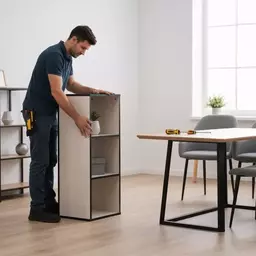
Flatpack furniture can look presentable from a distance while failing up close.
Inspect:
-
uneven gaps
-
missing caps
-
exposed screw heads
-
loose shelves
-
sagging doors
-
drawer misalignment
-
peeling veneer
-
chipped corners
-
unstable legs
-
panels installed backwards
-
shelves bowing under weight
-
wall anchors not installed where required
Poor assembly signals neglect. A buyer may not think, "That shelf is not included." They may think, "What else in this property has been done roughly?"
Fix small issues where possible. Tighten connectors, align doors, replace missing feet, clean hardware marks, and remove overloaded shelf contents.
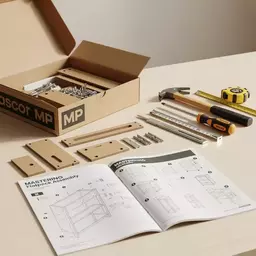
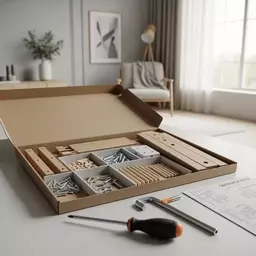
DIY Flat Pack's flat pack furniture assembly tips recommend organising the workspace, using the right tools, protecting flooring, and maintaining furniture after assembly. Those steps matter before sale because a loose or crooked piece can distract from the property itself.
If the item still looks poor after a basic repair, store or remove it.
Do Not Use Furniture to Hide Repairs
Furniture can make a room feel finished. It should not conceal faults.
Do not use a bookcase, sofa, rug, sideboard, bed, or storage cube to hide:
-
water staining
-
damaged skirting
-
wall cracks
-
mould
-
loose flooring
-
broken power points
-
damaged carpet
-
missing tiles
-
swollen cabinetry
-
peeling paint
-
pest damage
-
damp smells
Buyers, building inspectors, and agents may still notice the issue. If they do, trust drops quickly because the presentation appears to be concealing a defect.
Repair decisions should come before furniture decisions. If a defect is cosmetic and not being fixed, it should still be visible enough for a buyer to assess honestly.
Staging works best when the room is clean, functional, and truthful. It should not create a different story from the one the buyer will discover at inspection.
Use Flatpack Storage to Remove Clutter, Not Display It
Storage is useful before a sale only if it reduces visual noise.
Open cubes and shelves can become clutter displays. They photograph poorly when filled with mixed colours, paperwork, toys, cords, bags, shoes, random décor, and half-empty containers.
Closed storage usually works better. A simple sideboard, drawer unit, or cabinet can make a small living room feel calmer because the buyer sees one clean surface rather than many exposed objects.
If you already own open storage, edit it hard.
Keep:
-
a few neutral books
-
one plant
-
one simple basket
-
one or two decorative objects
-
useful items arranged cleanly
Remove:
-
paperwork
-
product packaging
-
gaming equipment clutter
-
visible cables
-
personal documents
-
tiny decorative objects
-
half-filled tubs
-
mismatched baskets
-
stacks of shoes
-
pet items unless they are neatly contained
The same principle applies to dining rooms. A table loaded with mail, appliances, school bags, and tools stops being a dining table in the buyer's mind. It becomes evidence that the home lacks storage.
When Should You Keep Flatpack Furniture?
Keep a piece when it supports the sale without drawing attention to itself.
Good keep candidates include:
-
a compact dining table in an open-plan meal zone
-
a narrow console that defines an entry without blocking it
-
a simple desk in a study nook
-
a tidy TV unit with hidden cords
-
a low bookshelf that adds proportion without visual weight
-
matching bedside tables that show bed clearance
-
closed storage that removes clutter from view
-
a small coffee table that leaves enough walking space
A piece is worth keeping when it answers a buyer's silent question.
Can this be a dining area? Can a queen bed fit? Is this a study nook? Where does the TV go? Can the room hold storage? Is there enough space to walk?
If the furniture answers the question clearly, keep it.
When Should You Store Furniture Temporarily?
Temporary storage is often better than permanent disposal.
Store a piece when it is useful in your next home but weakens the sale presentation in this one.
Common examples include:
-
an extra bookcase in a small bedroom
-
a large desk in a narrow study
-
a second dining table leaf
-
a spare TV unit
-
a child's storage cube that looks messy in photos
-
a bulky sideboard in a compact dining zone
-
exercise equipment in a living room
-
a flatpack wardrobe that makes the bedroom feel smaller
Use storage strategically. The aim is not to empty the house. The aim is to show the room's usable volume.
If you are still living in the home during the sale, start with the pieces that affect main listing photos. Living, dining, main bedroom, entry, and outdoor transition areas usually deserve the first pass.
Keep temporary storage labelled so you can find essentials after the campaign.
When Should You Replace a Piece Before Sale?
Replacement should be rare and purposeful.
Replace a flatpack item when all four conditions apply:
-
the room needs that type of furniture to make sense
-
the existing item is visibly damaged, unsafe, too bulky, or badly scaled
-
the replacement is low-cost and proportionate to the expected benefit
-
the replacement will not create more assembly, clutter, or moving work than it solves
Good replacement candidates include:
-
a badly damaged TV unit in the main living room
-
a dining table that is much too large for the space
-
a leaning bookcase that would raise safety concerns
-
mismatched open storage in a room with no built-in storage
-
a broken bedside table that makes the bedroom feel neglected
Avoid replacing furniture just to follow a trend. Buyers are not purchasing the furniture unless the sale includes it. They are using the furniture to understand room size, flow, and condition.
DIY Flat Pack's article on flatpack furniture brands in Australia is useful if replacement is genuinely needed, because it frames brand selection around budget, material quality, assembly requirements, and durability.
When Should You Remove Furniture Completely?
Remove a piece when it makes the property harder to read.
Strong remove candidates include:
-
broken flatpack that cannot stand squarely
-
stained or swollen laminate furniture
-
shelves that lean or wobble
-
units missing doors or drawers
-
pieces blocking windows
-
pieces blocking doors
-
pieces blocking inspection access
-
furniture used to hide defects
-
a dining table that prevents normal movement
-
too many small tables in one room
-
tall storage in a narrow room
-
furniture with obvious pet damage
-
an item that creates a trip hazard
If the room still makes sense without it, remove it. The aim is not to erase personality. It is to remove friction from the buyer's interpretation.
Make Small Living Rooms Feel Usable
Small living rooms need clear boundaries and breathing room.
Use furniture to show a simple layout:
-
seating facing one logical focal point
-
a clear entry path
-
one low table or ottoman
-
TV cords hidden
-
storage reduced to one clean unit
-
curtains or blinds fully open for photos
-
floor area visible under or around furniture
Avoid pushing every item against the wall if it creates a dead centre or awkward walkway. Sometimes a smaller rug and low table help define the seating zone, but do not add them if they create clutter.
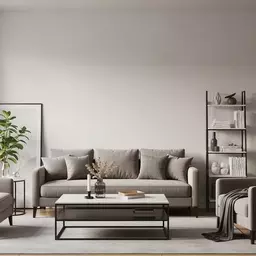
Flatpack furniture can help because many pieces are modular and compact. DIY Flat Pack's flatpack furniture shopping checklist notes the appeal of space-efficient and cost-effective pieces. Before a sale, those strengths are only useful if the furniture is restrained.
A small living room should say: "This works." It should not say: "The owner ran out of storage."
Style the Dining Area Without Overbuying
Dining rooms and dining zones are important because they help buyers imagine daily life and entertaining.
Do not over-style them.
A dining table should show realistic function. In a small area, four chairs may be stronger than six if six makes the space feel tight. A round or compact rectangular table can make an awkward zone easier to understand.
Keep the table simple:
-
clean surface
-
one low centrepiece
-
no tall vase blocking sightlines
-
no paperwork
-
no appliances
-
no stacked boxes
-
no oversized table setting
-
chairs pushed in evenly
If the table is damaged, use judgement. A tablecloth may be acceptable for a simple scratch, but not as a way to hide swelling, broken legs, or structural instability.
A 2026 realestate.com.au home-styling guide describes full-service styling as using short-term homewares, art, and furniture through the selling process from photos through to open house and sale. See its overview of styling a home for sale in 2026. For a DIY homeowner, the same principle applies at a smaller scale: use temporary presentation only where it improves clarity.
Check Safety Before Keeping Tall or Heavy Pieces
Safety should come before photography.
Flatpack furniture that is tall, heavy, damaged, poorly anchored, or overloaded should not stay in a room simply because it fills a blank wall.
The ACCC Product Safety guide says toppling furniture has killed at least 28 people in Australia since 2000 and causes nearly 20 injuries every week. It recommends flat placement, secure anchoring where appropriate, and keeping heavy items low. Review the toppling furniture and televisions guide before keeping tall storage for sale.
The mandatory toppling-furniture information standard came into effect on 4 May 2025. It applies to certain categories of furniture and requires safety warnings for suppliers. The ACCC has since warned that most assessed furniture suppliers failed aspects of the new rules. See its 2025 release on mandatory toppling furniture safety rules.
For sellers, the practical point is clear: do not keep a tall or unstable piece just because it looks useful in photos.
Check whether:
-
the furniture sits level
-
wall anchoring is installed where required
-
drawers move correctly
-
shelves are not overloaded
-
heavy items sit low
-
children will attend inspections
-
the piece can be bumped in a narrow walkway
-
the floor surface is stable
If you cannot make it safe and presentable, remove it.
Use a Two-Day Pre-Photography Reset
If the campaign is close, split the work into two short passes.
On day one, walk through each room, photograph from the doorway, mark furniture as keep, store, replace, or remove, and take out the damaged, unsafe, oversized, or visibly cluttered pieces first.
On day two, reset the kept furniture for clearer movement, hide cords, reduce open shelving, check tall pieces for stability, open the blinds, and take phone photos again.
Only buy a replacement after this process. Many rooms improve more from subtracting furniture than adding it.
Final Pre-Photography Checklist
Use this checklist after furniture decisions are complete.
Keep
- Kept furniture is correctly scaled.
- Each piece supports the room's function.
- Walkways are clear.
- Surfaces are clean.
- Cords are hidden.
- Tall pieces are stable and safe.
Store
- Extra shelving has been removed from small rooms.
- Bulky furniture is out of key sightlines.
- Personal storage boxes are not visible.
- Stored items are labelled for the move.
Replace
- Replacement is genuinely needed.
- The item fits the room.
- Assembly is complete and clean.
- Packaging has been removed.
- The old item has been disposed of or stored.
Remove
- Damaged pieces are gone.
- Unsafe furniture is gone.
- Furniture is not hiding defects.
- Doors, windows, and inspection access are clear.
- The room still reads clearly without the removed item.
The Best Result Is a Room Buyers Understand Quickly
Flatpack furniture before a sale should make the home easier to read. A clean dining table tells buyers where meals happen. A compact desk shows a work nook. A tidy TV unit gives the living area a focal point. A stable storage piece can solve visual clutter.
But too much furniture, damaged furniture, unsafe furniture, or furniture used to disguise defects works against the campaign.
Keep what clarifies the room. Store what crowds it. Replace only when the room needs a better anchor. Remove anything damaged, unsafe, misleading, or visually noisy.
For DIY homeowners who want to improve the room without overspending, start with the site's step-by-step flatpack furniture assembly guide, then use the checklist above before the photography day.